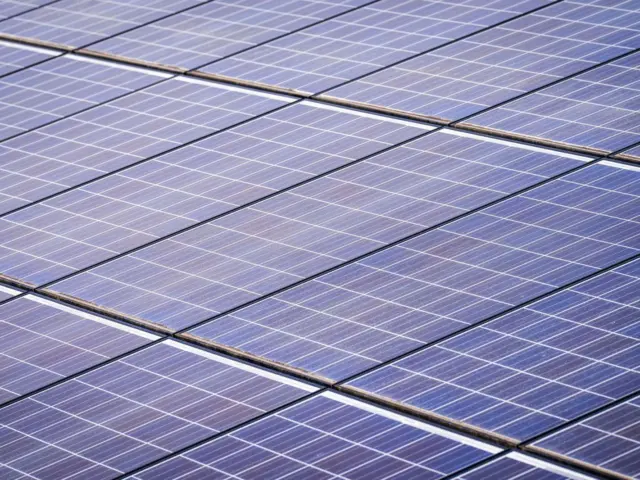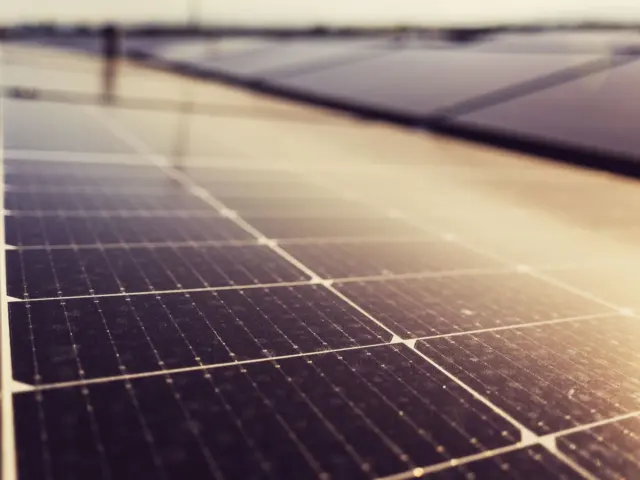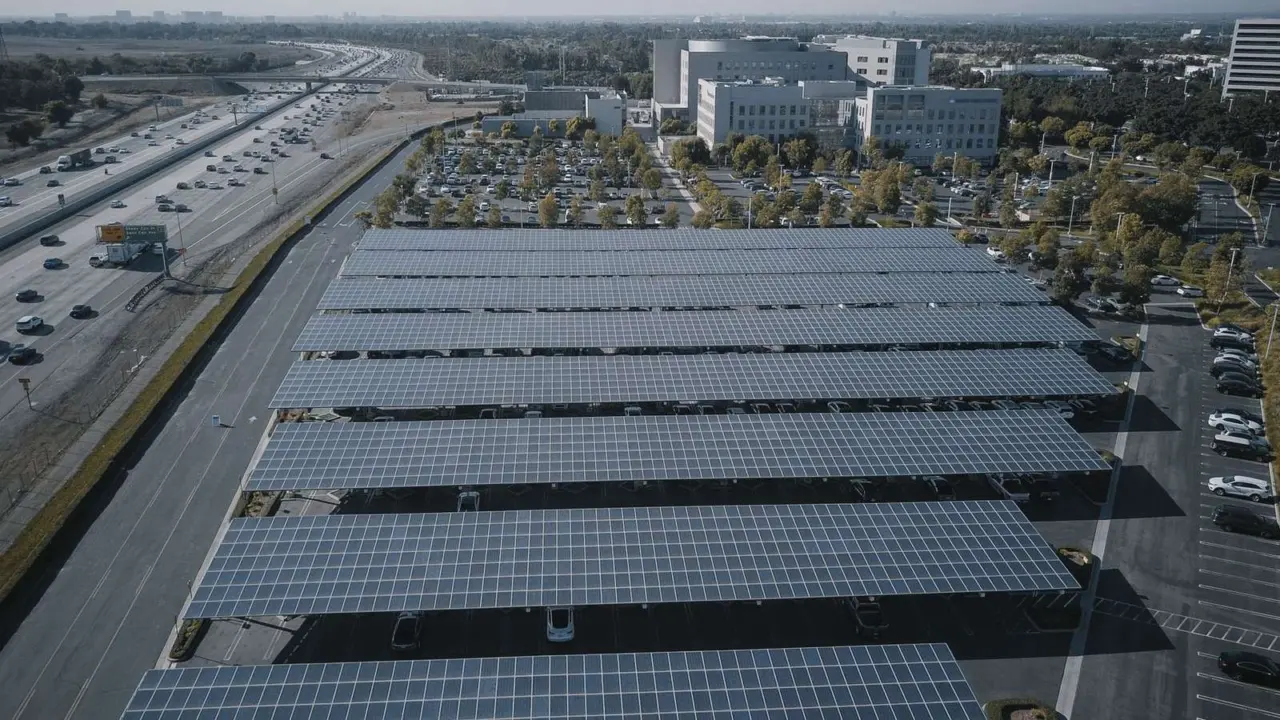
A solar car roof is a layer of photovoltaic cells built into a vehicle’s roof, glass or body panels, so that sunlight can power part of the car’s electrical load. It adds a modest amount of energy, not a replacement for charging.
The technology builds on thin, light cells of the kind described in the flexible solar cells hub, which is where the history and engineering of those cells are covered in depth.
Solar car roof basics
A photovoltaic cell turns light into direct current. On a vehicle, that current passes through a small power converter and then into the car’s electrical system, where it can run accessories or top up a battery. The engineering term for the whole idea is vehicle-integrated photovoltaics, usually shortened to VIPV.
The roof is the obvious place for the cells because it faces the sky and is flat, but a car roof has real handicaps compared with a solar farm. It is small, it is almost never tilted toward the Sun, and it spends much of its life in shade, in garages or in traffic. A study published in the journal Heliyon, which modelled a Volkswagen e-Golf, assumed panels mounted flat on the roof, and noted that panels work most efficiently when their surface is perpendicular to the Sun’s rays. A flat roof meets that condition only around midday.
Engineers also have to deal with curved surfaces. Rigid silicon panels do not follow the shape of a roof, which is one reason thin and flexible cell technologies attract interest from carmakers. The cells need to survive heat, vibration, car washes and years of weather while staying out of the way of the glass, the sunroof mechanism and the occupants’ headroom.
The Audi and Alta Devices project
One of the best-documented attempts to put thin-film cells on a premium car came from Audi. According to Semiconductor Today’s report dated 23 August 2017, Audi and Alta Devices of Sunnyvale, a subsidiary of Hanergy Thin Film Power, planned to cooperate on integrating solar cells into the panoramic glass roofs of cars, with the aim of increasing the range of Audi electric vehicles. The same report said the first prototype would be developed by the end of 2017.
The plan had stages. In the first step, the cells would go into a panoramic glass roof, and the electricity would flow into the car’s electric system to supply, for example, the air-conditioning system and seat heaters. Because Alta’s gallium arsenide cell technology was described as flexible, thin and efficient, the announcement said almost the entire roof surface could eventually be covered with solar cells. At a later stage, the energy could directly charge the traction battery.
The announcement also carried a business angle. A Hanergy executive was quoted as saying the Audi partnership was Alta Devices’ first cooperation with a high-end auto brand. Hanergy had completed its purchase of Alta Devices earlier, on 14 August 2014, and its statement at the time gave the thin-film gallium arsenide technology a conversion efficiency of 30.8 percent.
That efficiency came from small laboratory-style devices, which is a different thing from a roof module that must be produced in volume. Readers who want to see how such figures are measured and certified can read the explainer on how a solar cell efficiency record is defined and checked. The Audi announcement was a development plan with a prototype as its first milestone, not a sales launch.
Production cars with solar roofs
Solar roofs have reached customers on a few mainstream models, always as a supplement. Toyota’s press release for the Prius Prime says the solar roof uses roof mounted panels to recharge the battery when parked, and that the panels deliver supplemental power to accessory functions such as air conditioning while driving. The same release lists the solar glass roof among the optional features.
Hyundai took a similar route with the Sonata Hybrid. In New Atlas coverage dated August 2019, the carmaker said that if the car is left outside for six hours, the panels can fill the hybrid battery 30 to 60 percent, adding an average of 1,300 km (808 mi) of emissions-free driving annually. The same article described the roof as a supporter of the car’s driving energy needs, not its sole source of power.
These manufacturer figures are claims about average or ideal use, not measurements that any single owner will repeat. They depend on climate, parking habits and how much shade the car sees. They are best read as an indication of scale: the roof trims some energy use, particularly the air-conditioning load, and does not change how the car is fuelled.
Range a roof can add
Independent research gives a more cautious picture for cars and a more favourable one for large vehicles. The Heliyon study of an e-Golf that is recharged from roof panels during parking concluded that vehicle-integrated panels can provide energy for up to 6.32% of the range on a full charge during the sunniest summer months and up to 1.16% during the least sunny winter months, for the conditions modelled. Season matters more than almost any other variable.
A larger European project reached a different headline because it measured different things. Research led by Fraunhofer ISE, reported by pv magazine on 20 May 2026, found that passenger cars in Central Europe could generate up to 55% of their annual electricity demand through onboard solar generation, assuming relatively low annual mileage and large roof surfaces such as those found on SUVs. In Southern Europe the share could rise to 80%. The team analysed data from 23 different vehicle types, and the measurement data covered 1.3 million kilometers driven.
The two results do not contradict each other. One compares solar energy with the energy stored in a full battery on a single day, and the other compares a year of solar output with a year of electricity demand, with a car that drives little and has a big roof. Low mileage and a large roof area favour the second result.
Commercial vehicles gain the most. The same project found that VIPV can extend the daily driving range of electric trucks by up to 15%, and that truck trailers equipped with rooftop PV can generate up to 55 kWh per day during summer months. Trucks, vans and trailers combine a large flat roof with constant demand for cooling, heating and auxiliary systems, which suits solar generation better than a small car roof does.
Where solar car roofs have struggled
The clearest cautionary example is Lightyear, a Dutch company that built its first car around a solar roof. DutchNews reported on 24 January 2023 that Lightyear had stopped production of the Lightyear 0, which cost €250,000, and that it had requested court protection from creditors for the subsidiary responsible for that model. Production had started in November, and only a handful of cars had been completed. The company said it would redirect its effort to the Lightyear 2, a car described as partly powered by solar panels in its roof and hood.
Two lessons follow from that episode. First, building a vehicle whose bodywork doubles as a power plant is expensive, because the cells have to be curved, protected and certified to automotive standards. Second, a high price shrinks the market, which makes it hard to reach the volumes that bring cell and module costs down. The sibling explainer on high altitude pseudo satellites shows the other side of the same trade-off: aircraft that stay aloft on sunlight can justify very costly lightweight cells because weight and area are the whole design problem, whereas a family car has cheaper options for adding range.
Weight and drag count as well. A solar roof adds mass and may change how the glass behaves in heat, so a carmaker has to show that the energy gained outweighs those costs. For many models, a larger battery or a more efficient drivetrain delivers more range for the money. That is why solar roofs have appeared mainly as options on a few models, where they give marketing value and some real, if small, energy savings.
Outlook for vehicle-integrated solar
Several developments could change the arithmetic. Higher-efficiency cells produce more power from the same roof, thinner modules are easier to curve, and costs fall when a technology is made in volume. The Fraunhofer-led project worked with TNO, Sono Motors, IM Efficiency and Lightyear under a mandate from the European Commission, which shows that the research is organised and continuing, even though the commercial record so far is mixed.
The most plausible near-term use is in places where the roof is large relative to the energy demand: delivery vans, refrigerated trailers, buses and campers. A passenger car owner is more likely to meet the technology as a small accessory feature than as a main source of energy, and the price of any such option should be checked against what it can realistically return in the owner’s own climate.
Frequently asked questions
Can a solar car roof fully charge an electric car?
No roof described on this page replaces plug-in charging for a passenger car. Toyota and Hyundai describe their roofs as supplemental, and the Heliyon modelling of an e-Golf found that the roof could supply only a small share of a full battery’s range.
Do solar car roofs work when the car is parked in the shade?
Output falls sharply without direct sunlight. Panels work most efficiently when they face the Sun, so a shaded or garaged car collects little, and a flat roof collects less in winter than in summer.
Did Audi ever sell a car with the Alta Devices roof?
The 2017 announcement described a development partnership with a planned prototype as the first milestone. It was a research and development plan, not a sales launch.
Which vehicles benefit most from rooftop solar?
Research led by Fraunhofer ISE points to trucks, vans and trailers, which have large roofs and a steady need for cooling, heating and auxiliary power, and to passenger cars with large roofs and low annual mileage.